Best Oils and Foods for Hair Growth (and Why a Supplement Beats Both)
For hair growth which oil is best? The evidence-based answer is less exciting than any bottle’s marketing promises: rosemary oil performed about as well as minoxidil in the one rigorous trial that has compared them head-to-head, castor oil has essentially no clinical trial behind it despite being the internet’s favorite, and no oil — applied to strands or massaged into the scalp — can fix a follicle that isn’t getting the nutrients it needs to build a hair in the first place. This guide walks through what the research on hair-growth oils actually shows, which foods genuinely move the needle, and why an oral supplement that feeds the follicle from within tends to outperform topical oils and diet changes made in isolation.
Before comparing individual oils and foods, it helps to separate two different questions people often mix up: what can I put on my hair to make it look better today, and what does my follicle actually need to keep producing strong hair for years? Oils mostly answer the first question. For a broader look at what actually moves hair growth forward, our guide on practical ways to increase hair growth covers the full picture beyond a single bottle of oil.
Want to support hair growth from the inside while you sort out oils and food?
Primadar: daily follicle support in one capsuleFor Hair Growth Which Oil Is Best? The Quick, Honest Answer
The short answer is: rosemary oil has the strongest evidence among topical oils, roughly matching minoxidil 2% in the one head-to-head trial that has been run, but “matching a topical drug” is a lower bar than most people assume, and no single oil has been shown to outperform a nutrition-first approach applied consistently. Castor oil, coconut oil and argan oil all have loyal followings and real cosmetic benefits — shine, less breakage, a moisturised scalp — but none of them have the clinical trial data rosemary oil has for actual regrowth.
The more useful reframe is this: oils act on the hair shaft and scalp surface, largely from the outside in. Growth itself is decided inside the follicle, which needs protein building blocks, iron, biotin and other micronutrients delivered through the bloodstream, not massaged in through the scalp. That is the gap oils cannot close on their own, and it’s the gap a well-formulated oral supplement is built to address.
The Most Popular Hair-Growth Oils: Rosemary, Castor, Coconut and Argan, Reviewed
Rosemary oil is currently the most evidence-backed hair-growth oil, thanks to a 2015 randomized trial (detailed below) that found it performed comparably to topical minoxidil over six months. It’s inexpensive, widely available and generally well tolerated, which explains its rise from folk remedy to a genuinely researched ingredient. When people search for the best oil for hair growth and thickness specifically, rosemary oil is usually the one worth trying first, since it’s the only one with trial evidence for density, not just surface shine.
Castor oil is the internet’s most recommended hair-growth oil, largely on the strength of anecdote and its high ricinoleic-acid content, which does have some anti-inflammatory properties. There is, however, no published clinical trial showing castor oil regrows hair; its real, demonstrated benefit is added shine and reduced breakage from the thick, occlusive coating it leaves on the strand.
Coconut oil has genuine, published evidence for reducing protein loss from hair during washing and grooming, which matters for length retention and breakage prevention, but that is a hair-shaft benefit, not a follicle-stimulating one.
Argan oil is rich in vitamin E and fatty acids that leave hair softer and shinier; like coconut oil, its role is cosmetic and protective rather than growth-stimulating. Used together, these oils can make existing hair look healthier while you address growth through nutrition, which is exactly where most oil-only routines quietly fall short.
Best Oil for Hair Growth and Thickness: What to Look For
If you are choosing the best oil for hair growth and thickness, judge it on two things rather than on marketing claims: whether the oil has any published human evidence behind it, and whether you can realistically apply it several times a week for six months. Rosemary is the only one of these oils with a head-to-head human trial; the others are mainly conditioning agents that reduce breakage, which can make hair look thicker without changing how much hair actually grows.
What the Rosemary Oil vs Minoxidil Study Actually Found
The trial people cite when they say rosemary oil “works like minoxidil” is a randomized comparative study published in the peer-reviewed journal SKINmed, where 100 patients with androgenetic alopecia used either rosemary oil or minoxidil 2% for six months. Both groups showed a significant increase in hair count by month six compared with baseline, with no statistically significant difference between the two groups — read the full study on PubMed.
What often gets left out is the itching: scalp itching increased in both groups but was more frequent with minoxidil. Neither treatment worked meaningfully at three months — both needed the full six months to show a real difference from baseline. That six-month timeline, not a quick fix, is the honest expectation for any topical approach, oil or drug.
Best Foods for Hair Growth: What Your Follicles Actually Need
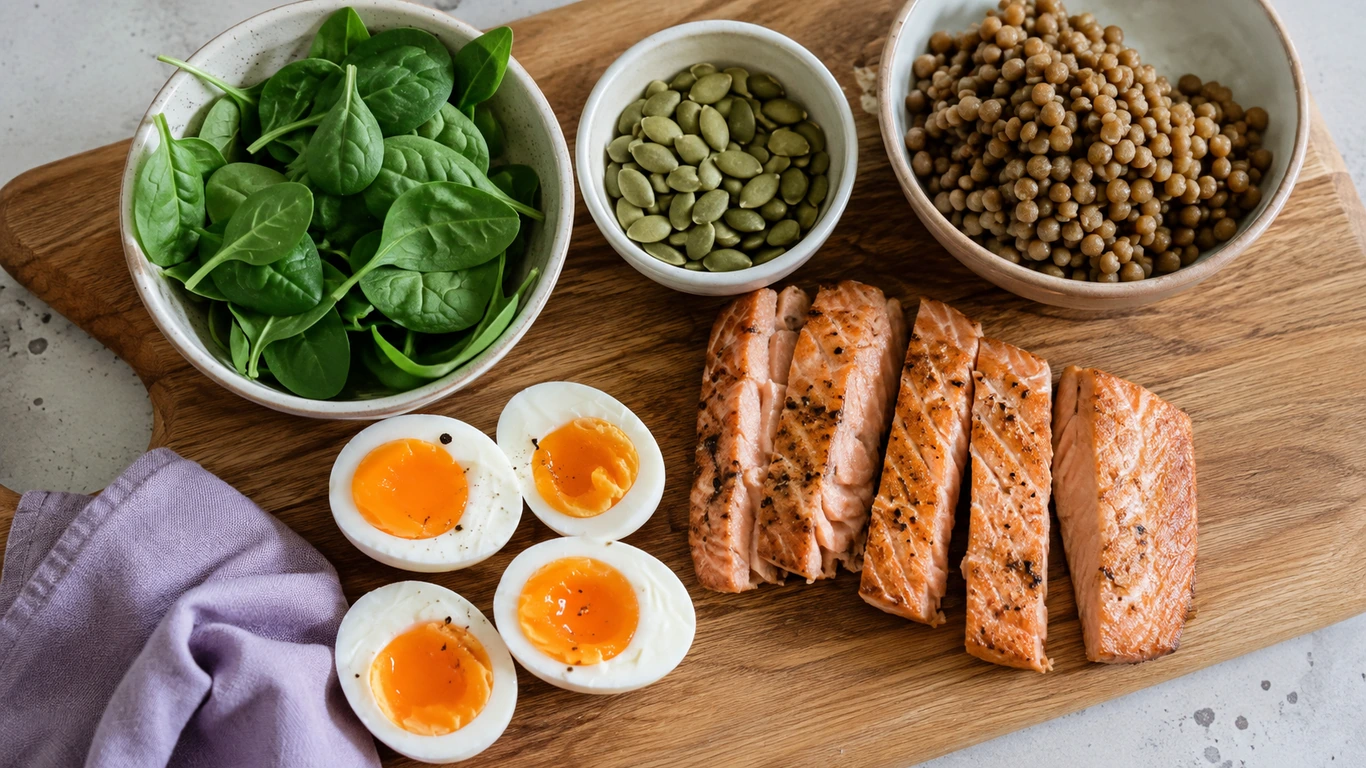
Hair follicles are metabolically demanding, and a shortfall in a handful of nutrients shows up in hair before almost anywhere else in the body. Iron is the single most studied deficiency linked to hair shedding, particularly in women; a peer-reviewed review on iron-deficiency-related alopecia available via PMC/NCBI found that low serum ferritin is consistently associated with female pattern hair loss, and that correcting it within six months tends to produce a better outcome. Iron rich foods for hair growth include red meat, lentils, spinach and fortified cereals, ideally paired with vitamin C to improve absorption.
Protein matters just as directly, since hair is roughly 95 percent keratin, a protein built from amino acids including cysteine; eggs, fish, legumes and dairy all supply it. Biotin rich foods for hair growth — eggs, nuts, seeds and salmon — support the same keratin-production pathway, though outright biotin deficiency is genuinely rare in people eating a varied diet; our explainer on biotin’s role in hair health goes deeper into how much you actually need. Zinc, found in shellfish, pumpkin seeds and beef, supports follicle repair and oil-gland function around the hair root.
The honest limitation of food alone is dose and consistency: getting therapeutic levels of iron, biotin and zinc from diet daily, every day, for the months hair growth actually takes, is harder in practice than most people manage, which is exactly the gap a daily supplement is designed to close.
Iron Rich Foods for Hair Growth
Iron rich foods for hair growth matter most for people whose ferritin is genuinely low, which is common in menstruating women. Red meat, liver, lentils, chickpeas, spinach and pumpkin seeds are practical sources, and pairing plant sources with a little vitamin C improves absorption. Iron is worth testing before supplementing, since too much can be harmful — ask your doctor for a ferritin reading rather than guessing.
Biotin Rich Foods for Hair Growth
Biotin rich foods for hair growth include eggs, almonds, sweet potatoes, salmon and sunflower seeds. True biotin deficiency is rare in people eating a varied diet, so food-level biotin is more about covering your baseline than driving new growth. That is also why biotin tends to be more useful as one part of a wider formula than as a standalone fix.
Why Oils and Food Alone Often Fall Short
Oils face a basic delivery problem: hair itself is dead keratin, so no oil “feeds” a growing follicle by sitting on top of strands. Even scalp-massaged oils reach the surface skin, not the dermal papilla deep below where growth signals actually originate. That’s why oils’ best-documented wins are shine, breakage reduction and mild scalp support, with rosemary oil as the outlier that shows a real, if modest, growth signal.
Food faces a different problem: consistency and dose. Life gets in the way of eating exactly the right iron, protein, biotin and zinc combination every single day for the three to six months hair growth requires, and busy weeks or travel are exactly when nutrition slips. Most people who try “eating better for their hair” for a month, see nothing, and quit, were never actually feeding the follicle correctly for long enough or precisely enough to test the theory properly.
Oils vs Food vs Supplement: Side-by-Side
None of these three approaches is inherently wrong; they simply act on different parts of the problem, and the right combination depends on what’s actually driving your hair loss or slow growth:
| Factor | Hair oils (rosemary, castor, coconut) | Diet changes | Daily supplement (Primadar) |
|---|---|---|---|
| What it targets | Hair shaft, scalp surface | Nutrient intake, if sustained | Follicle nutrition, delivered systemically |
| Best evidence | Rosemary oil vs minoxidil, 6 months | Iron/ferritin correction studies | Miliacin + biotin + B5 + L-cysteine formula |
| Main limitation | Doesn’t reach the follicle directly | Hard to sustain daily dosing from food alone | Needs months of consistent use; not a cure for every cause |
| Effort required | Daily application, mess, smell | Constant meal planning | One capsule a day |
Common Mistakes People Make With Hair Oils
The first mistake is expecting a two-week result. People searching for the best oil for hair growth faster are usually hoping to skip this timeline, but every serious study on hair-growth oils and hair-growth foods, including the rosemary trial above, measured results at three and six months, not two weeks, because that’s how long a hair follicle’s growth cycle genuinely takes to show a visible difference.
The second is layering oil over oil, hoping more equals faster: heavy daily oiling can clog follicles and leave hair looking greasy without adding any extra growth signal beyond what a lighter, consistent routine already provides. The third is treating oil as a complete strategy and ignoring the follicle’s nutritional needs entirely, which is where most oil-only routines plateau. The fourth is skipping a cause check: hair loss driven by thyroid issues, iron deficiency or hormones will not meaningfully respond to any oil, however well-reviewed, until the underlying cause is addressed — for hair loss with a hormonal driver specifically, how DHT drives hair thinning is worth reading, since no oil touches that pathway.
Chasing the Best Oil for Hair Growth Faster
Hunting for the best oil for hair growth faster is the most common way people waste a year. Hair grows roughly one centimetre a month, and a follicle that has only just re-entered its growth phase still needs three to six months before the change is visible. Switching oils every few weeks also resets your own ability to judge what worked, so pick one approach and give it a full season before deciding.
Why a Daily Supplement Beats Both Oils and Food Alone
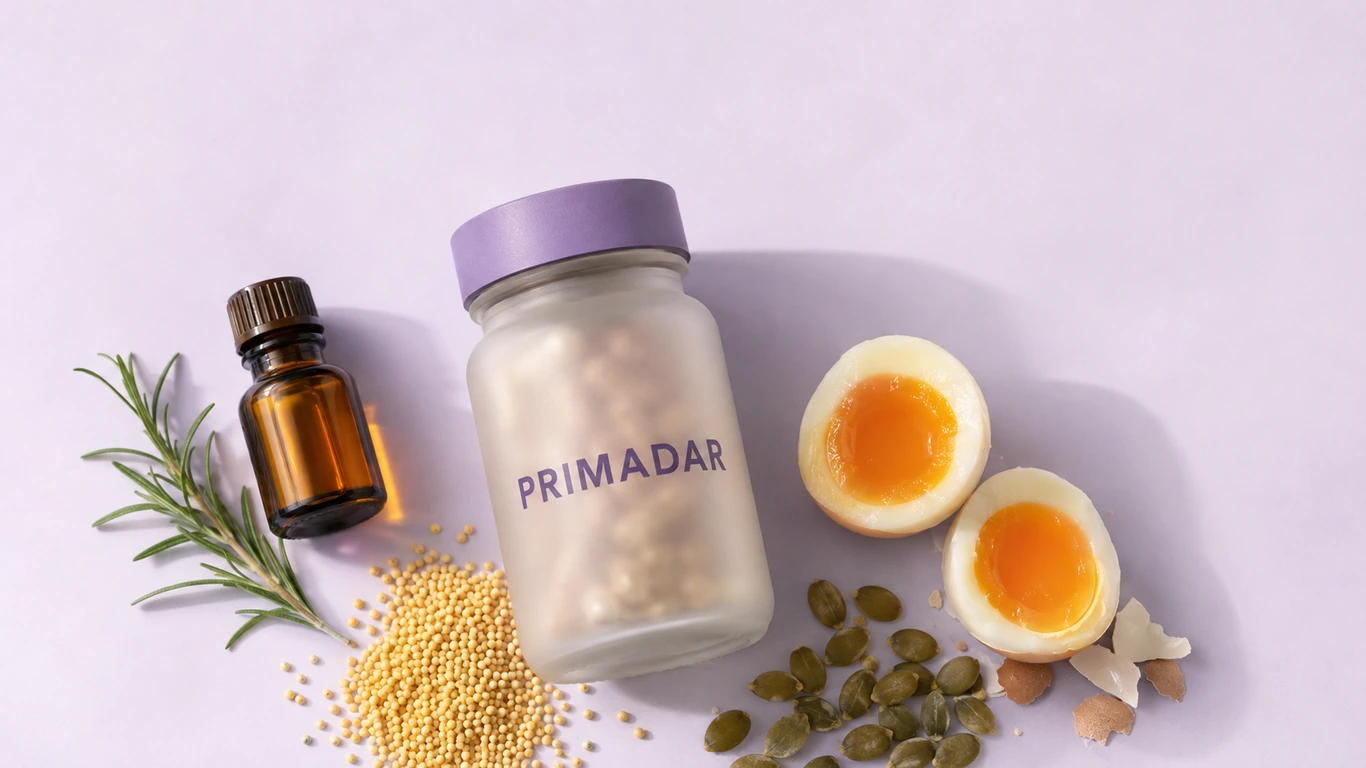
A well-formulated oral supplement solves the two problems above at once: it delivers nutrients systemically, through the bloodstream to the follicle rather than sitting on the hair shaft, and it removes the dosing-consistency problem of diet by putting a fixed, adequate amount in a single daily capsule. Primadar combines Miliacin — a triterpenoid extracted from millet seed — with biotin, vitamin B5 and L-cysteine, supporting the follicle through more than one pathway rather than relying on a single ingredient. The millet-derived active in Primadar’s formula is grounded in the millet-extract (Miliacin) science, and a related millet complex is the subject of a registered clinical trial on ClinicalTrials.gov.
This doesn’t make oils or good nutrition pointless — rosemary oil’s modest evidence and a genuinely iron-rich diet are both worth keeping. It means a daily supplement is the piece most routines are missing: the one delivery method that reliably reaches the follicle every day without asking you to remember a six-step routine or plan every meal around your hair.

Oil sits on the hair you already have. Food and supplements are what decide whether the next hair is stronger than the last one.
A Simple Decision Checklist
Before you buy another bottle of oil, answer these honestly:
One: Have you actually tracked results for a full three to six months, or judged an oil or diet change after two or three weeks?
Two: Is your hair concern about shine and breakage (an oil problem) or about density and growth (a follicle-nutrition problem)?
Three: Can you realistically sustain a strict, iron-and-biotin-rich diet every day for months, or would a single daily capsule be easier to keep up with?
Four: Have you ruled out a hormonal or medical cause, such as thyroid dysfunction or DHT-driven pattern loss, that no oil, food or supplement alone will fix?
Five: Are you willing to combine approaches — a lighter oil routine for shine, better iron intake, and a daily supplement for consistent follicle support — rather than expecting one bottle to do everything?
So, For Hair Growth Which Oil Is Best? Combine, Don’t Choose
The honest answer is rosemary oil for the topical route, a genuinely iron-and-protein-rich diet for the nutritional route, and a daily supplement for the consistency neither oils nor meal planning reliably deliver on their own. Primadar’s blend of Miliacin, biotin, vitamin B5 and L-cysteine is built to support the follicle every day, in one capsule, while you keep whichever oil and food habits already work for you.
Frequently Asked Questions
For hair growth, which oil is best?
Rosemary oil currently has the strongest clinical evidence among hair-growth oils: a six-month randomized trial found it performed comparably to topical minoxidil 2% for androgenetic alopecia, with fewer reports of scalp itching. Castor oil, coconut oil and argan oil all offer real cosmetic benefits — shine, less breakage, a better-conditioned scalp — but none currently has published clinical trial evidence for regrowth the way rosemary oil does. No oil alone reaches the follicle deeply enough to replace proper nutrition, so pairing rosemary oil with an iron-and-protein-rich diet, or a daily supplement, tends to outperform any single oil used alone.
Do hair growth oils actually work, or is it mostly marketing?
It depends on the oil and the goal. For cosmetic goals — shine, softness, reduced breakage — coconut oil and argan oil have genuine, published support. For actual follicle stimulation and regrowth, only rosemary oil has real trial data behind it, and even that trial needed six full months to show a difference from baseline. Most other oils marketed for hair growth are supported mainly by tradition and anecdote rather than controlled studies, which doesn’t mean they’re useless, just that their proven benefits are cosmetic rather than growth-stimulating.
What are the best foods for hair growth?
Iron-rich foods such as red meat, lentils and spinach are the most consistently studied, since low serum ferritin is strongly linked to hair shedding, particularly in women. Protein sources like eggs, fish and legumes supply the amino acids hair is built from, biotin-rich foods such as eggs, nuts and salmon support the same keratin pathway, and zinc from shellfish and pumpkin seeds supports follicle repair. The practical challenge is consistency: getting adequate amounts of all of these daily, for the three to six months hair growth takes, is harder through diet alone than most people manage.
Can I use hair oil and a hair supplement at the same time?
Yes, and it’s often the most effective combination, since they work on different parts of the problem. A topical oil such as rosemary oil can support the scalp and hair shaft, while an oral supplement like Primadar delivers nutrients such as Miliacin, biotin, vitamin B5 and L-cysteine directly through the bloodstream to the follicle, which no oil can do. There’s no known conflict between using a hair oil topically and a nutritional supplement orally, but anyone pregnant, breastfeeding, on medication or managing a chronic condition should consult a doctor or pharmacist before starting anything new.
Is Primadar better than hair growth oils?
Primadar and hair oils aren’t direct competitors; they work differently. Primadar is an oral supplement that supports the hair follicle from within using Miliacin, biotin, vitamin B5 and L-cysteine, aimed at the nutritional side of hair growth that no topical oil can reach. Hair oils like rosemary oil work at the scalp and hair-shaft level. For most people, a daily supplement addresses the more common gap — inconsistent nutrient delivery to the follicle — while a light oil routine can still be kept for scalp comfort and shine. Results from Primadar, like any nutrition-first approach, build over months of consistent use rather than days.