
DHT Blockers & Minoxidil Side Effects: Is There a Safer Natural Option?
DHT blocker searches have exploded because more people now understand that the hormone dihydrotestosterone, not shampoo or stress alone, is the real engine behind male and female pattern hair loss. The instinct is to reach for the strongest option, whether a prescription blocker or a minoxidil routine, but the strongest option is not always the safest or the most sustainable. This guide explains what a DHT blocker actually does, weighs pharmaceutical blockers against natural ones, lays out the minoxidil side effects people underestimate, and shows where a gentler, nutrition-first approach fits for those who want something they can live with long term.
Before choosing any product, it helps to see hair loss as a system with a cause rather than a single symptom to attack. Prescription blockers, minoxidil and natural options each act on a different part of that system, and matching the tool to the cause matters far more than buying the most-marketed bottle. For one common prescription approach, our detailed guide on finasteride for hair loss covers how the pharmaceutical route works and who it suits.
Want to support your follicles from the inside while you weigh your options?
Primadar: natural support for your hair from the rootWhat Is a DHT Blocker, and Does It Stop Hair Loss?
A DHT blocker is any treatment that lowers dihydrotestosterone (DHT), the androgen hormone responsible for shrinking genetically sensitive hair follicles. In pattern hair loss, DHT binds to receptors in the follicle and gradually miniaturises it, so each new hair grows finer, shorter and weaker until the follicle stops producing visible hair at all. Reduce DHT, and you slow or interrupt that miniaturisation, which is the whole logic behind every blocker on the market.
What a blocker cannot do is just as important. It will not revive a follicle that has been dormant and smooth for years, and it does nothing useful if your hair loss is driven by iron deficiency, thyroid problems, stress, crash dieting or post-illness shedding rather than by DHT. That is the honest catch: a DHT blocker only helps DHT-driven loss. This is why the first real step is not choosing a product but understanding your cause, ideally with a professional, so you are not lowering a hormone that was never your problem.
How DHT Causes Pattern Hair Loss
DHT is made when the enzyme 5-alpha-reductase converts a portion of your testosterone into a more potent androgen. Everyone produces DHT, and it plays normal roles in the body, but in androgenetic alopecia the follicles at the temples, hairline and crown are genetically oversensitive to it. Over years, repeated DHT exposure shortens the growth phase of these follicles and lengthens their resting phase, so hairs spend less time growing and more time simply waiting and falling.
The result is the familiar pattern: a receding hairline and thinning crown in men, and diffuse thinning across the part in women. Because the process is gradual and hormone-driven, it responds best to an approach that addresses the hormone early, while the follicles are still alive and only miniaturised rather than gone. This time sensitivity is why people research a DHT blocker the moment they notice thinning, and why acting on an accurate diagnosis beats waiting for the loss to become obvious.
Types of DHT Blocker: Pharmaceutical vs Natural
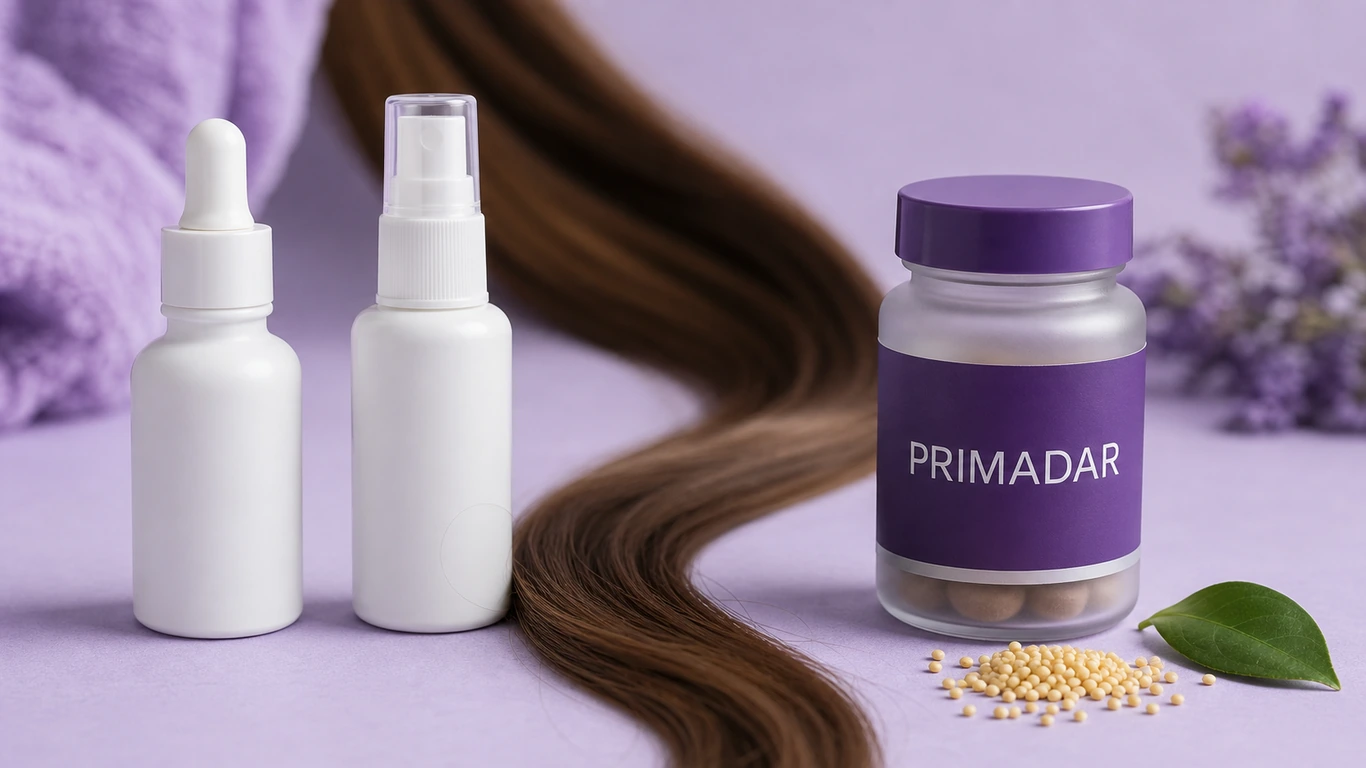
Broadly, a DHT blocker falls into one of two camps. Pharmaceutical blockers are 5-alpha-reductase inhibitors, most commonly finasteride and the stronger dutasteride. They cut DHT levels substantially and carry the strongest clinical evidence for pattern hair loss, but as prescription drugs they can bring hormonal side effects, which is why they must be discussed with a doctor. If you want the detail on that route, our guide on finasteride for hair walks through the benefits and the cautions.
Natural blockers work on the same enzyme but far more gently. Saw palmetto is the best known, alongside ingredients like pumpkin seed oil, green tea and certain nutrients thought to have a mild anti-androgen effect. They appeal to people who want to avoid prescription-strength hormonal changes, but their effect is smaller and less consistent, so they are best seen as gentle support rather than a guaranteed fix. Crucially, neither camp does anything for non-hormonal shedding, which is where a nutrition-first supplement and a proper diagnosis matter more than any blocker.
Minoxidil Side Effects: Why a Blocker Isn’t the Whole Story
Many people researching DHT actually end up on minoxidil, so it is worth being clear: minoxidil is not a DHT blocker at all. It does not touch the hormone. Instead it stimulates follicles at the surface of the scalp, prolonging their growth phase regardless of DHT. That means it can help alongside a blocker, but it also means it treats the symptom rather than the cause, and it comes with its own trade-offs.
The minoxidil side effects worth knowing are scalp dryness, itching, flaking and irritation, an early shedding phase in the first weeks, and sometimes unwanted facial hair. Because minoxidil began life as a blood-pressure medication, a minority of users report dizziness or a faster heartbeat, particularly with the oral form. Anyone with a heart condition, low blood pressure, or who is pregnant or breastfeeding should consult a doctor or pharmacist before starting. For a fuller breakdown of these reactions and how to handle them, see our article on minoxidil side effects in detail.
Oral Minoxidil, Minoxidil MUP and Finjuve Spray
The market keeps adding formats, and the names get confusing fast. Oral minoxidil is a low-dose tablet that has become popular because it removes the daily mess of a topical, but taking minoxidil systemically raises the chance of the blood-pressure-related side effects above, so it is strictly a doctor-supervised option, not a self-prescribed one. Minoxidil MUP simply means minoxidil unified percentage, a foam formulation that dries quickly without the propylene glycol found in many liquids, which many people find less irritating than the drops.
Finjuve spray and similar newer topicals aim to make application easier and gentler on the scalp, but they do not change the underlying rule: any minoxidil product stimulates from the outside and stops working once you stop using it, and none of them lower DHT. So whether you are weighing oral minoxidil, a minoxidil MUP foam or a Finjuve spray, the same two questions apply, is this treating my actual cause, and can I realistically sustain it? A newer delivery format does not answer either one for you.
Natural DHT Blockers: Saw Palmetto, Nutrition and the Follicle
For people who want to avoid prescription-strength hormonal effects, a natural DHT blocker is the obvious draw. Saw palmetto is the headline ingredient, and searches for a saw palmetto DHT blocker have grown alongside the wider interest, because it is thought to partially inhibit the same 5-alpha-reductase enzyme that finasteride targets, only far more mildly. Other natural DHT blockers for hair loss include pumpkin seed oil, green tea extract and zinc, which is involved in normal hormone metabolism.
The realistic expectation is important. A natural DHT blocker will not match a prescription drug’s reduction in DHT, so it is best framed as gentle, supportive help for milder cases or for people who cannot tolerate the medication, not as a guaranteed reversal. What natural approaches do well is pair with nutrition, and here the evidence for feeding the follicle is genuinely encouraging. A study on a millet-and-wheat extract complex published in the peer-reviewed journal Nutrients and available via MDPI reported improved hair condition, which is why millet extract has become a serious follicle-support ingredient rather than folklore. If you want to know how far a natural, non-drug route can realistically take you, our honest look at whether safe natural hair pills exist sets sensible boundaries.
Diet and topical oils come up constantly in this conversation, and most of what circulates online is not supported. For the version that is, see the best oils and foods for hair growth.
Where Primadar Fits: Nutrition-First Follicle Support
This is where an oral, follicle-supporting supplement earns its place, and where it is honest about what it is not. Primadar is not a DHT blocker and not a drug. It does not lower your hormones. Instead it feeds the follicle from the inside, which addresses the part of hair loss that blockers and minoxidil both ignore: whether the follicle has the raw materials to build a strong, healthy hair in the first place.
Primadar combines Miliacin, a triterpenoid extracted from millet seed, with biotin, vitamin B5 and L-cysteine, so the follicle is supported through more than one pathway at once: Miliacin to encourage growth activity at the source, biotin and L-cysteine as the keratin building blocks, and vitamin B5 for scalp health. For a deeper look at how the active ingredient works, see our explainer on the millet-extract (Miliacin) science. For DHT-driven loss, this is a supporting role played alongside whatever your doctor recommends for the hormonal side; for shedding tied to poor nutrition or an exhausted follicle, it can be a gentler standalone starting point. Either way, it needs months of consistent use, not days, and anyone pregnant, breastfeeding, on other medication or managing a chronic condition should consult a doctor or pharmacist first.
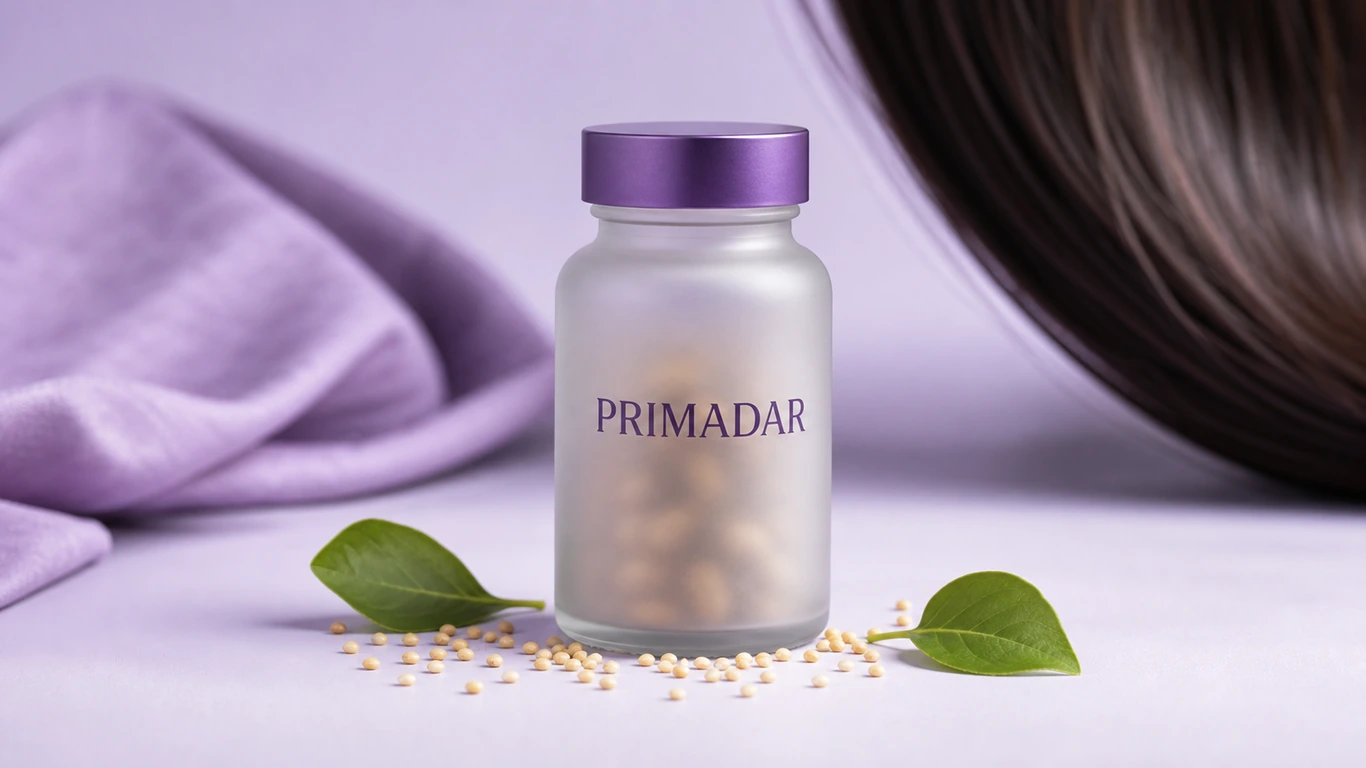
Lowering DHT is only half the picture. A follicle still has to be fed to build a strong hair, and that is the half most people forget until the shedding continues.
DHT Blockers, Minoxidil and Primadar: Side-by-Side
None of these is universally “best”; they act on different parts of the problem, and many people end up combining them under guidance. This comparison is a general guide, not a diagnosis, and the right choice depends on your cause of hair loss and a professional’s input:
| Factor | Pharmaceutical DHT blocker | Minoxidil (topical/oral) | Primadar (supplement) |
|---|---|---|---|
| What it targets | Lowers DHT via 5-alpha-reductase | Stimulates follicles at the surface | Feeds the follicle from within |
| Best suited to | Diagnosed DHT-driven pattern loss | Active follicles, early to moderate thinning | Shedding linked to nutrition or follicle fatigue |
| Main drawbacks | Possible hormonal side effects, prescription only | Irritation, shedding phase, lifelong dependence | Not a cure for hormonal or genetic causes alone |
| If you stop | DHT returns, loss usually resumes | Gains typically shed over months | Nutritional support meant for sustainable use |
For a closer comparison of the natural-versus-topical decision specifically, our dedicated guide on how Primadar compares with minoxidil goes deeper than a single table can.
Common Mistakes People Make With DHT Blockers
The first mistake is treating a cause you do not have. Buying a DHT blocker for shedding that is actually caused by low iron, a thyroid issue or crash dieting means lowering a hormone that was never the problem, while the real driver keeps working. A diagnosis first is not optional caution; it is the difference between fixing the cause and chasing the wrong one.
The second mistake is impatience. Every hormonal and nutritional approach works on the hair cycle’s timescale, months, not weeks, so quitting after a fortnight guarantees you never see whether it would have worked. The third is treating “natural” as automatically equal to prescription strength; a natural DHT blocker is gentler by design, and expecting finasteride-level results from saw palmetto sets you up to feel it failed when it was only ever mild support.
The fourth mistake is relying on one lever while ignoring the system, taking a blocker while sleeping badly, eating poorly and skipping the nutrients the follicle needs to build hair. And the fifth, the riskiest, is self-treating warning signs that actually need a doctor, which is exactly where the next section comes in.
When to See a Doctor First
Some hair loss needs assessment before you touch any blocker or minoxidil. See a doctor if your shedding is sudden and rapid, if there are sharply defined bald patches that could signal an autoimmune or fungal condition, or if hair loss comes with scalp pain, redness, pus or sores. These are not patterns a DHT blocker is designed for.
You should also get checked if hair loss arrives with general symptoms such as marked fatigue, unexplained weight change, or menstrual irregularity, since these can point to a thyroid, hormonal or nutritional cause. Prescription DHT blockers specifically require medical supervision because of their hormonal effects, and oral minoxidil must be doctor-managed given its blood-pressure origin. The safe rule is simple: confirm what is actually causing your hair loss before committing months and money to any single treatment.
Not sure which path fits your situation? Ask us directly.
Ask on WhatsAppA Simple Decision Checklist
Before you buy anything, answer these five questions honestly; your answers point you toward the right path instead of trial and error:
One: Is your hair loss actually DHT-driven pattern thinning, or could it be nutritional, hormonal or stress-related? Only the first type responds to a blocker.
Two: If a blocker fits, are you willing to involve a doctor and accept that stopping usually means the loss resumes?
Three: Do you want prescription strength with its hormonal trade-offs, or gentler natural support with a smaller, less certain effect?
Four: Are you supporting the follicle nutritionally at the same time, or expecting one hormonal lever to do everything on its own?
Five: Can you realistically sustain your chosen routine for months? The approach you can keep up beats the strongest one you abandon.
If you are still deciding between blockers, minoxidil and a nutrition-first approach, this breakdown of what hair loss treatment actually works compares them honestly against each other.
Your Result Starts With an Honest Decision
A DHT blocker can genuinely slow pattern hair loss, but only for hair loss that DHT is actually causing, and pharmaceutical strength comes with side effects and a permanent commitment. Minoxidil helps at the surface yet never touches the hormone, with trade-offs of its own. If you want an option you can sustain, and you want to feed the follicle the building blocks it needs whatever else you do, Primadar’s blend of Miliacin, biotin, vitamin B5 and L-cysteine is built for that supporting role, on its own for nutrition-linked shedding or alongside a doctor’s plan for the hormonal side.
Frequently Asked Questions
What does a DHT blocker actually do?
A DHT blocker works by reducing dihydrotestosterone, or DHT, the androgen hormone that shrinks genetically sensitive hair follicles in pattern hair loss. Pharmaceutical blockers such as finasteride inhibit the 5-alpha-reductase enzyme that converts testosterone into DHT, while natural options such as saw palmetto are thought to have a milder, partial effect on the same pathway. Lowering DHT can slow follicle shrinkage and, in some people, allow thinning hair to recover density. It does not regrow hair on a scalp that has been smooth and bald for years, and it only helps the type of hair loss that is actually driven by DHT, which is why a diagnosis matters before you choose any blocker.
Is a natural DHT blocker as effective as finasteride?
Generally no. Prescription 5-alpha-reductase inhibitors such as finasteride reduce DHT far more powerfully than natural DHT blockers like saw palmetto, and they have the strongest clinical evidence for androgenetic alopecia. Natural DHT blockers for hair loss tend to have a gentler, less consistent effect, which some people prefer because it usually comes with fewer hormonal side effects. The honest position is that a natural blocker may suit mild cases or people who cannot tolerate the drug, but it is not a like-for-like replacement. Discuss the trade-off with a doctor or pharmacist rather than assuming natural automatically means equally effective.
What are the main minoxidil side effects?
The most common minoxidil side effects are scalp dryness, itching, flaking and irritation, plus an early shedding phase in the first weeks as follicles cycle. Some users notice unwanted facial hair, and because minoxidil was originally a blood-pressure drug, a small number report dizziness or a racing heartbeat, especially with oral minoxidil. Minoxidil does not lower DHT at all, so it treats the surface rather than the hormonal cause. Anyone with a heart condition, low blood pressure, or who is pregnant or breastfeeding should consult a doctor or pharmacist before using it, and stop and seek advice if serious symptoms appear.
Can I combine a DHT blocker with a hair supplement?
Often yes, because they work on different pathways, but you should clear it with a doctor or pharmacist first, particularly if a prescription blocker is involved. A DHT blocker addresses the hormonal driver, while a nutrition-first supplement supports the follicle with the building blocks it needs to produce healthy hair. Many people use a supplement such as Primadar to support the follicle from within alongside whatever their doctor recommends for the hormonal side. A supplement is not a substitute for treating a diagnosed hormonal cause, and it works gradually over months of consistent use rather than overnight.
Is Primadar a DHT blocker?
No. Primadar is a nutritional supplement that supports the hair follicle from within, not a hormonal DHT blocker and not a drug. It combines Miliacin from millet extract with biotin, vitamin B5 and L-cysteine to give the follicle building blocks and support through more than one pathway, which suits shedding linked to poor nutrition or an exhausted follicle. For hair loss that is genuinely DHT-driven, a supplement can play a supporting role alongside a doctor’s plan, but it does not lower DHT the way finasteride does. Consult a doctor or pharmacist before starting if you are pregnant, breastfeeding, on other medication or managing a chronic condition.